
Game Designs
- Home
- Game Designs
German Wargaming Center
Our Game Designs
The portfolio of the German Wargaming Center comprises a diverse range of serious games, planning games, simulation games, and wargames, specifically developed to make decision-making under uncertainty tangible and to foster strategic thinking in complex environments. In these game designs, political, military, economic, and societal systems are represented in an abstracted form, allowing their dynamics, interactions, and inherent uncertainties to be analyzed and reflected upon.
The games enable participants to experience the consequences of strategic decisions firsthand and to explore the challenges of real-world decision-making in a protected, simulation-based environment. They serve both the education and training of professionals and executives, as well as strategic analysis, the development and testing of scenarios, and preparation for crisis and conflict situations.
Taken together, these game designs form an integrated methodological toolkit that supports organizations in strengthening their strategic capacity for action, increasing their resilience to complex and dynamic challenges, and sustainably fostering interdisciplinary collaboration among diverse stakeholders.
Signature Games
Entanglement - Signature Strategic Foresight Wargame of the German Wargaming Center
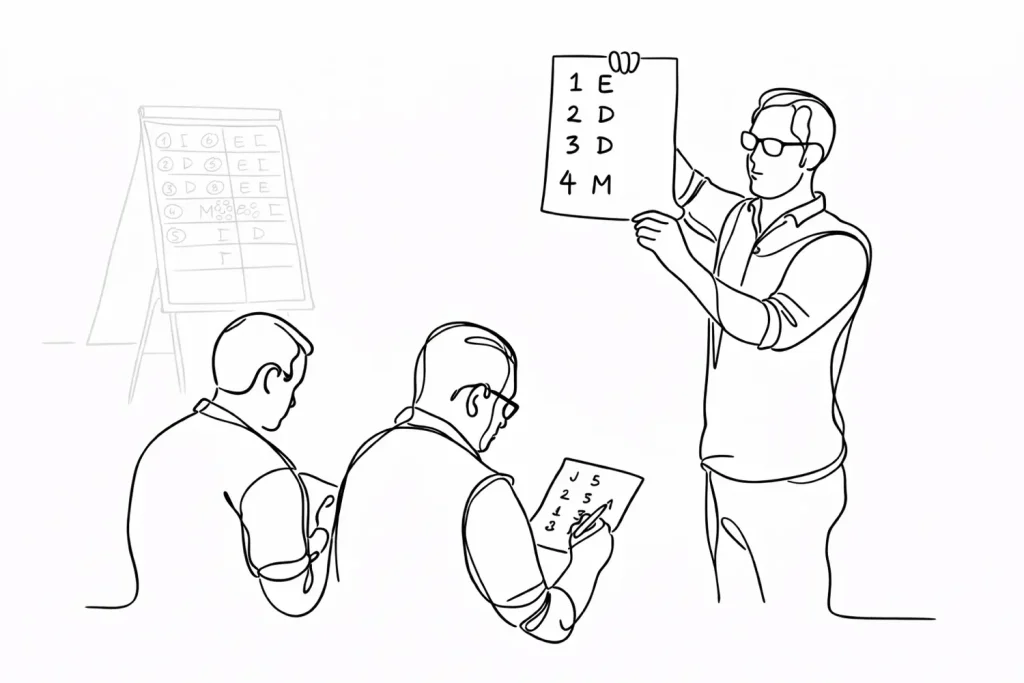
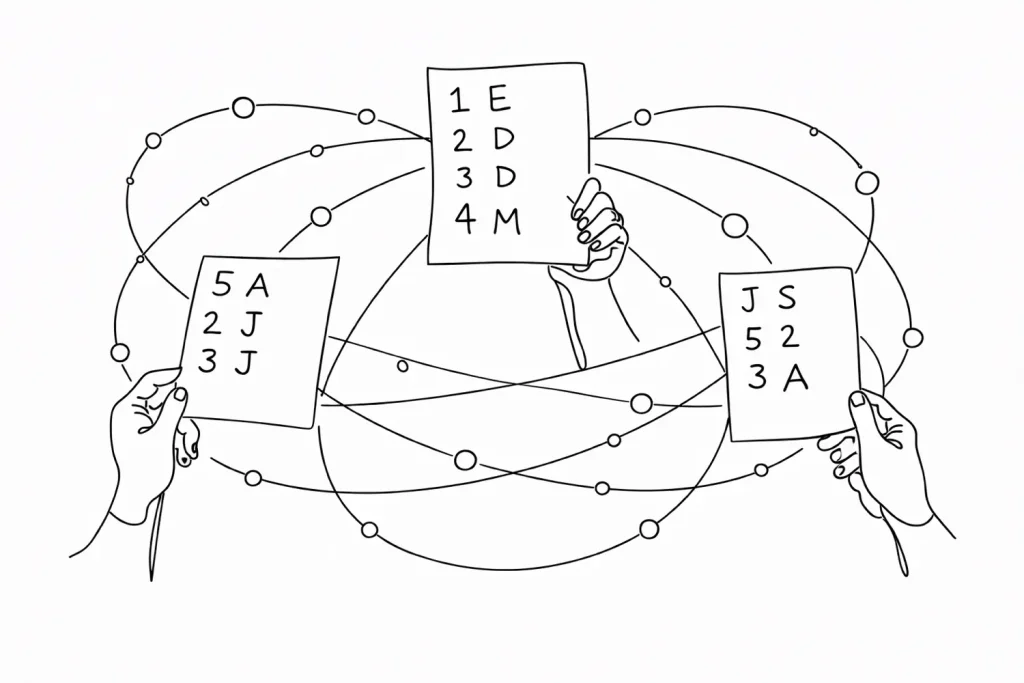
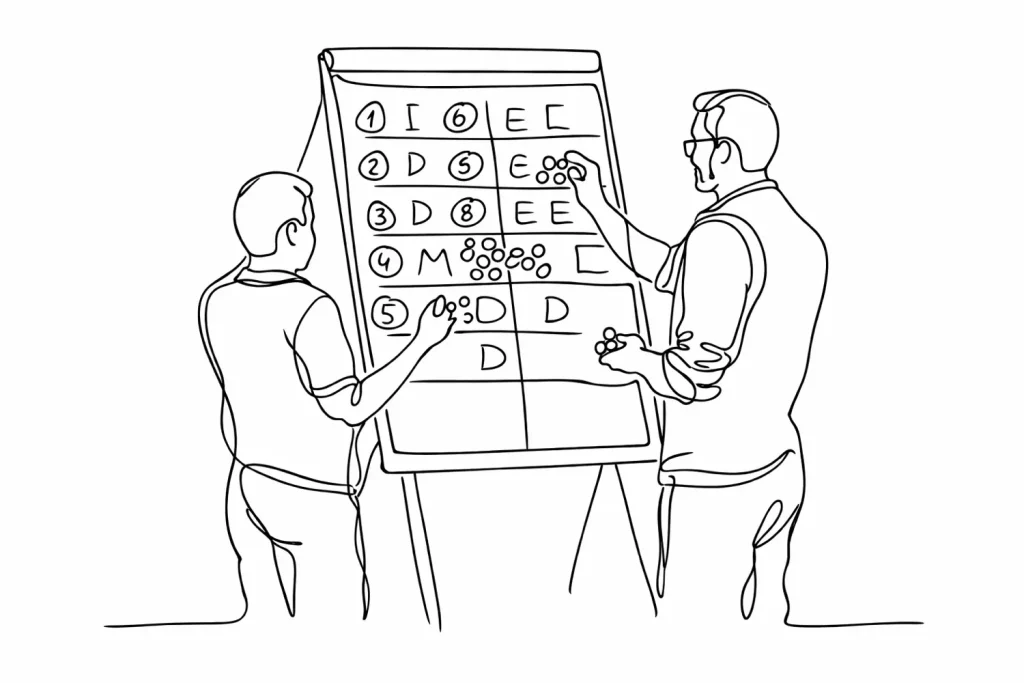
Entanglement is the central signature game of the German Wargaming Center. It was developed as an in house research wargame to systematically examine and make tangible strategic decision making in complex geopolitical and geoeconomic contexts. It combines the methodological rigour of academic research with the practical utility of strategic simulation and serves as an instrument for analysing future challenges, supporting strategic reflection, and enabling institutional learning.
The German Wargaming Center developed the game as a modular research and simulation format and has conducted it with a wide range of national and international partners, including federal ministries, military institutions, international organisations, companies, political foundations, and research institutions. Across these application contexts, Entanglement has been used to explore strategic questions such as the future of critical supply chains, the resilience of European defence cooperation, and the implications of geopolitical power shifts for partnerships and economic dependencies.
At the core of the game is the simulation of strategic interaction among realistically modelled actors, including states, international organisations, companies, and political institutions. Participants assume these roles and make decisions under uncertainty, incomplete information, and competing interests. Unlike linear scenario exercises, the game world emerges dynamically from participant interaction. Strategic choices reshape the environment, create new options, and generate emergent developments that mirror the complexity of real geopolitical processes.
The methodological structure follows a round based decision model in which participants develop and implement concrete strategic measures such as diplomatic initiatives, economic investments, security cooperation, or regulatory interventions. These actions are assessed for plausibility, strategic effect, and connectivity and then shape the continued evolution of the simulated world. This creates an interactive strategic space in which cooperation, competition, trade offs, and strategic adaptation become immediately experienceable.
A key analytical value of Entanglement lies in its ability to make institutional decision logics and strategic behaviour patterns visible. The game shows how actors set priorities under uncertainty, how economic, political, and security instruments are combined, and how institutional perspectives shape strategic choices. At the same time, it enables participants to explore alternative pathways, challenge implicit assumptions, and reflect on the consequences of decisions in a protected simulation environment.
As a research game, Entanglement serves not only education and awareness building but also the generation of analytical insights. The interactions, decision logics, and dynamics observed in the game provide valuable qualitative evidence about strategic behaviour, institutional patterns, and possible future developments. In this way, Entanglement helps organisations strengthen strategic foresight, reflect on decision capability, and improve their ability to act in complex and dynamic geopolitical environments.
As the signature game of the German Wargaming Center, Entanglement exemplifies the Center’s approach to developing academically grounded, realistic, and analytically robust wargaming formats that connect research, strategic analysis, and practice oriented learning.
Convergence - Signature research game of the German Wargaming Center for simulating whole of society crisis and conflict dynamics
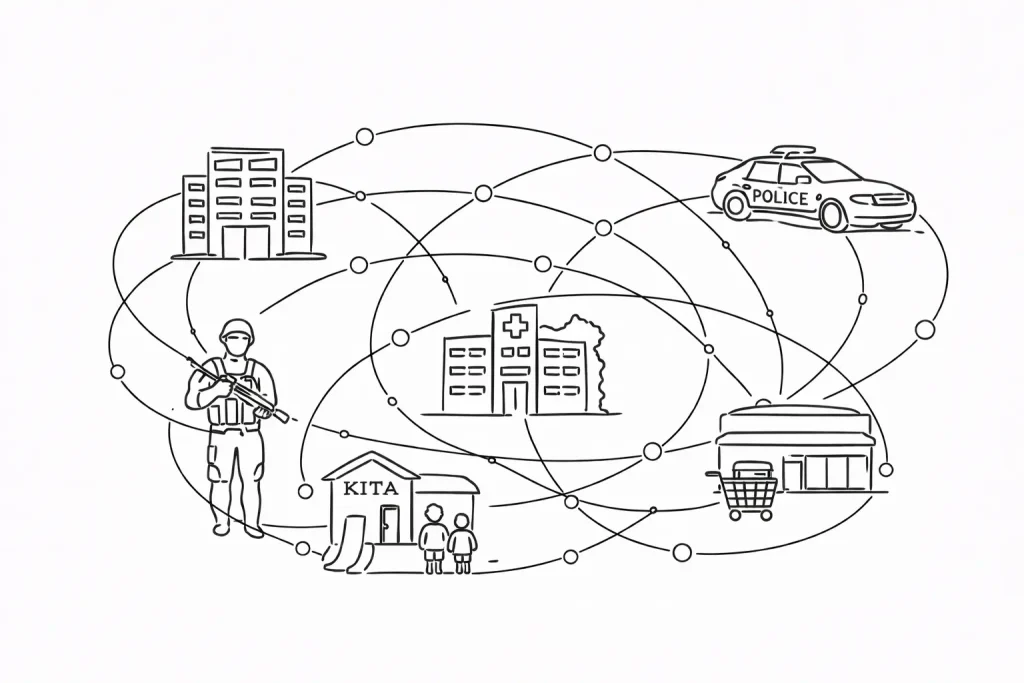
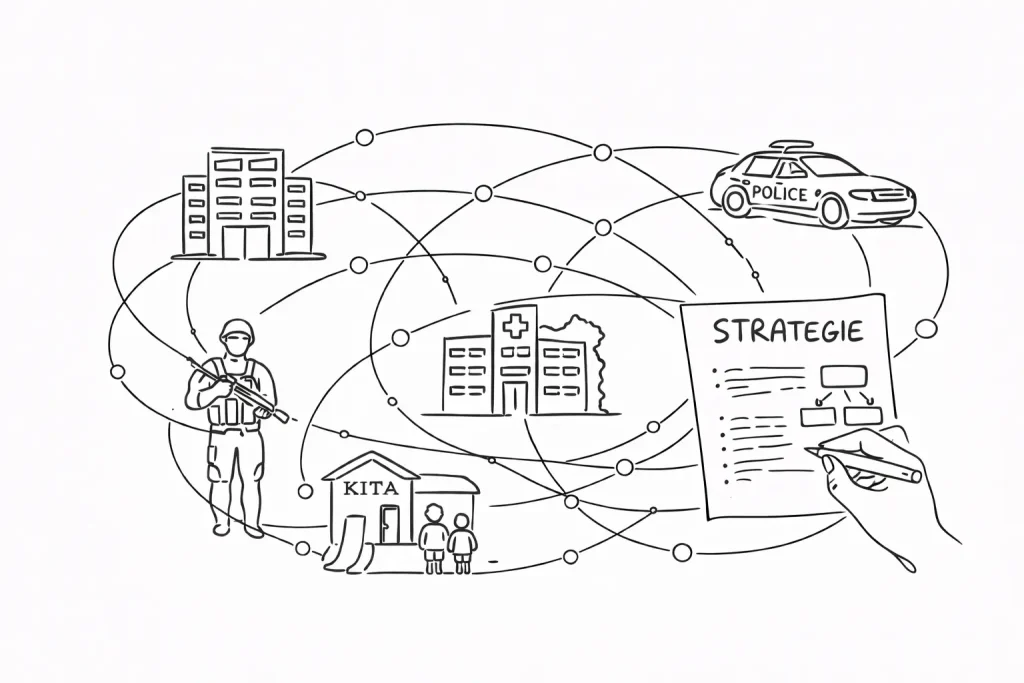
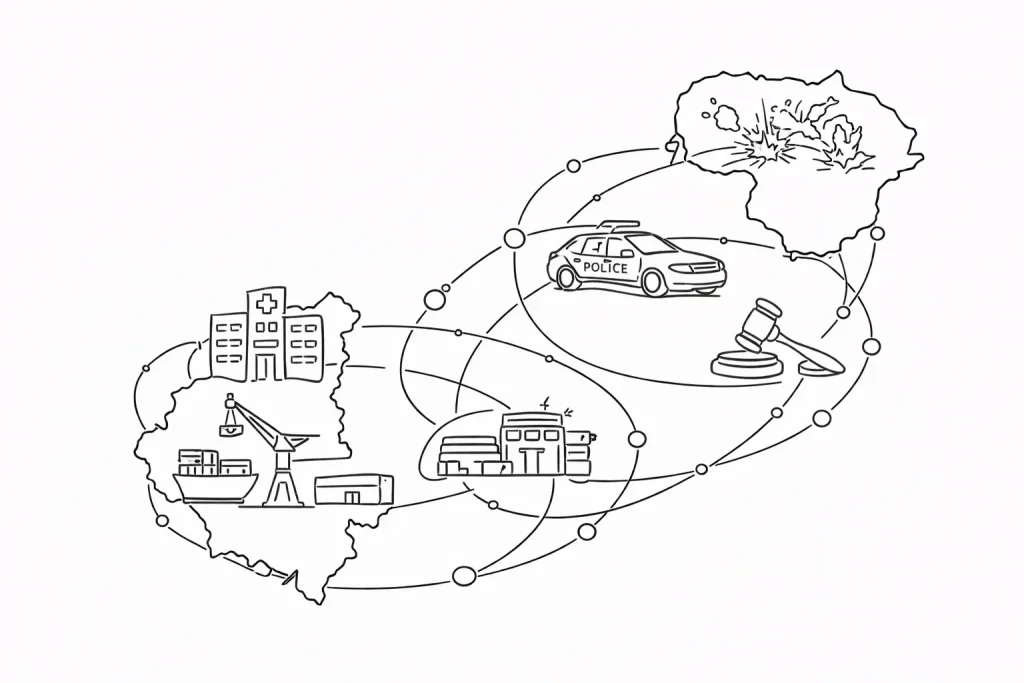
Convergence is a signature research game of the German Wargaming Center and was developed as an independent whole of society crisis and conflict simulation to systematically analyse the ability of governmental, economic, and societal actors to maintain agency under complex and escalating crises. The game serves as a research, analysis, and training instrument for examining decision processes, coordination mechanisms, and institutional resilience in hybrid and cross sector crisis environments.
At the heart of Convergence is the simulation of a complex crisis environment in which security tensions, hybrid threats, infrastructure disruptions, and societal stressors occur simultaneously and reinforce one another. Unlike classic military wargames, Convergence focuses on the whole of society dimension of crises and conflict and examines how state institutions, security actors, economic organisations, and societal structures jointly respond to systemic challenges.
Participants assume roles from different institutional contexts, including public administration, security authorities, armed forces, companies, critical infrastructure operators, and other relevant actors. They must make decisions, set priorities, and develop coordination mechanisms under resource constraints, incomplete information, and high uncertainty. The game makes visible how agency does not arise from formal responsibilities alone but from the dynamic interaction of actors, institutional structures, and situational demands.
A particular focus is the grey zone between normality and open crisis in which institutional roles, responsibilities, and decision processes are still emerging. In this phase, actors must build situational awareness, define operational priorities, and establish coordination structures while time pressure, uncertainty, and systemic stress increase. Convergence makes this transition phase explicitly experienceable and enables organisations to analyse structural challenges and potential options for action in a protected simulation environment.
As a signature research game of the German Wargaming Center, Convergence combines academically grounded modelling with practical applicability. It was designed to empirically examine strategic decision making, analyse patterns of institutional interaction, and support organisations in reflecting on and developing their crisis and decision structures. It is used in research projects, strategic workshops, and training formats and can be adapted flexibly to different scenarios and institutional contexts.
Convergence exemplifies the German Wargaming Center’s research approach of using wargaming as an analytical tool to study complex societal systems. As an in house development of the Center, the game contributes to strengthening strategic foresight, institutional resilience, and whole of society agency in an increasingly complex and dynamic security environment.
Strategic & Hybrid Conflict Simulations
HyDRA - Strategic wargame for analysing hybrid conflict
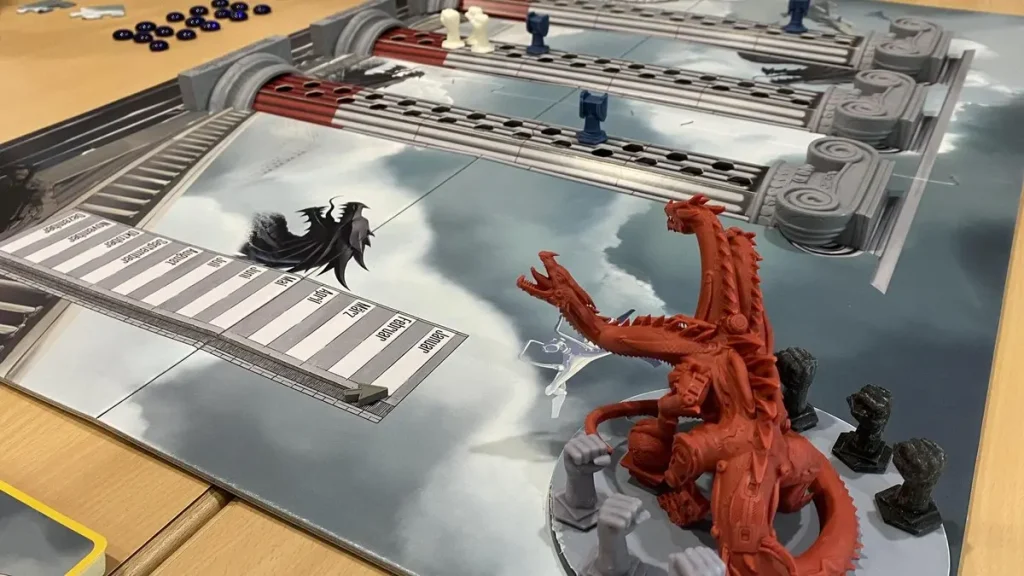
HyDRA is a strategic wargame for analysing contemporary hybrid conflict in which military, political, economic, technological, and informational instruments are combined to achieve strategic objectives below the threshold of open military confrontation. The game simulates the complex dynamics of such conflict and enables participants to analyse and understand hybrid threats from the perspective of different strategic actors.
Participants assume roles as state or institutional actors and operate either on the side of an attacking or a defending system. The attacking side employs a wide spectrum of hybrid instruments, including disinformation campaigns, economic pressure, political influence operations, cyber activity, or targeted destabilisation of societal structures. The defending side must identify and assess these actions and develop counter strategies without undermining its own legitimacy, institutional stability, or societal resilience.
The game illustrates the logic of hybrid conflict as a strategic competition for influence, perception, and structural vulnerability. It shows how hybrid strategies aim to shape decision spaces, generate uncertainty, and erode institutional agency without crossing into open conflict. At the same time, it highlights which political, societal, and institutional factors contribute to resilience against hybrid threats.
The German Wargaming Center has assumed project responsibility for the further development of HyDRA and continues to evolve the game as an analytical and educational instrument. This includes conceptual refinement of the game mechanics, adaptation to current security challenges, integration of new hybrid threat scenarios, and the conduct and methodological evaluation of simulations with diverse institutional partners.
HyDRA serves both as a training tool and as an instrument for analysis and reflection. It helps participants develop a deeper understanding of hybrid conflict, reflect on strategic decision making under uncertainty, and test institutional courses of action in complex threat environments. The game is particularly suited for security policy education, strategic planning, inter institutional cooperation, and organisations working on questions of national and international security and resilience.
Commander Sisu - Card based strategy game for analysing hybrid threats
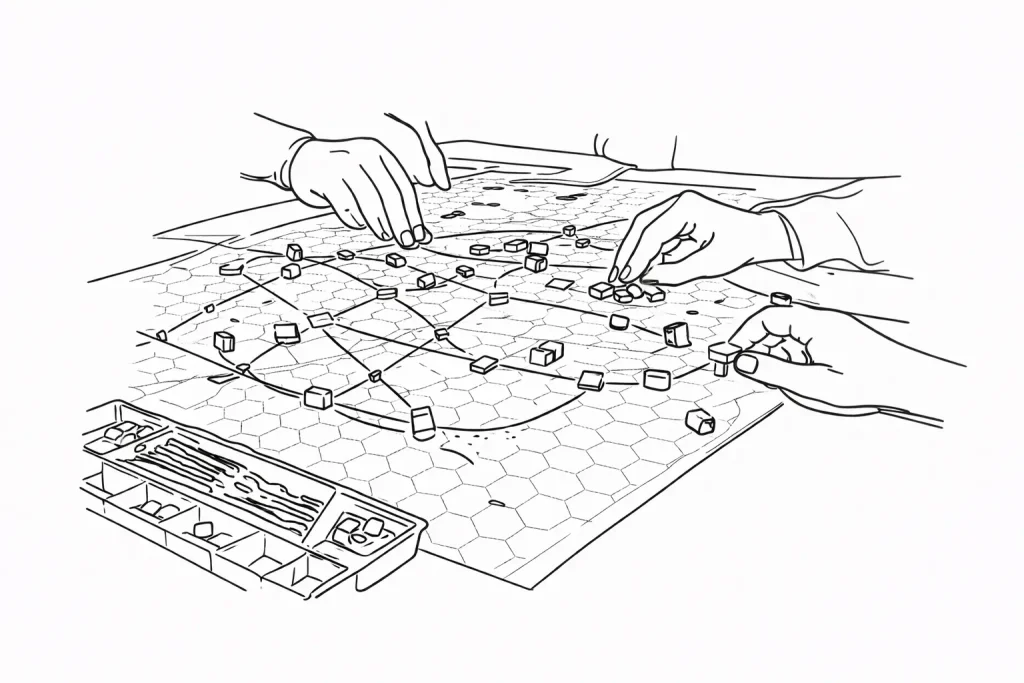
Commander Sisu is a strategic, card based serious game that captures the dynamics of hybrid conflict in a compact and accessible format. It enables participants to experience and analyse the complex interactions of political, economic, informational, and security influence from the perspective of strategic decision makers.
The game was developed by Colonel General Staff Sönke Marahrens, Fellow of the German Wargaming Center and an expert in hybrid conflict and strategic analysis. As part of the extended portfolio of the German Wargaming Center, Commander Sisu is used in training, analysis, and awareness formats.
In the game, participants take on roles as state or institutional actors and face a range of hybrid threats including disinformation, political influence, economic pressure, or attempts to destabilise society. They must assess developments, set priorities, and develop counter measures while simultaneously pursuing their own strategic objectives and considering longer term consequences.
Commander Sisu illustrates how hybrid threats deliberately generate uncertainty and exploit institutional vulnerabilities. At the same time, it makes visible the importance of strategic coherence, inter institutional cooperation, and anticipatory decision making for managing such threats.
Through its compact structure, Commander Sisu is well suited as an entry point into the subject of hybrid conflict as well as a complementary instrument for strategic training, awareness, and analysis. It promotes strategic thinking, communication capability, and a deeper understanding of contemporary conflict dynamics in an interactive and practice oriented format.
Hedgemony - Strategic wargame for resource allocation and great power strategy
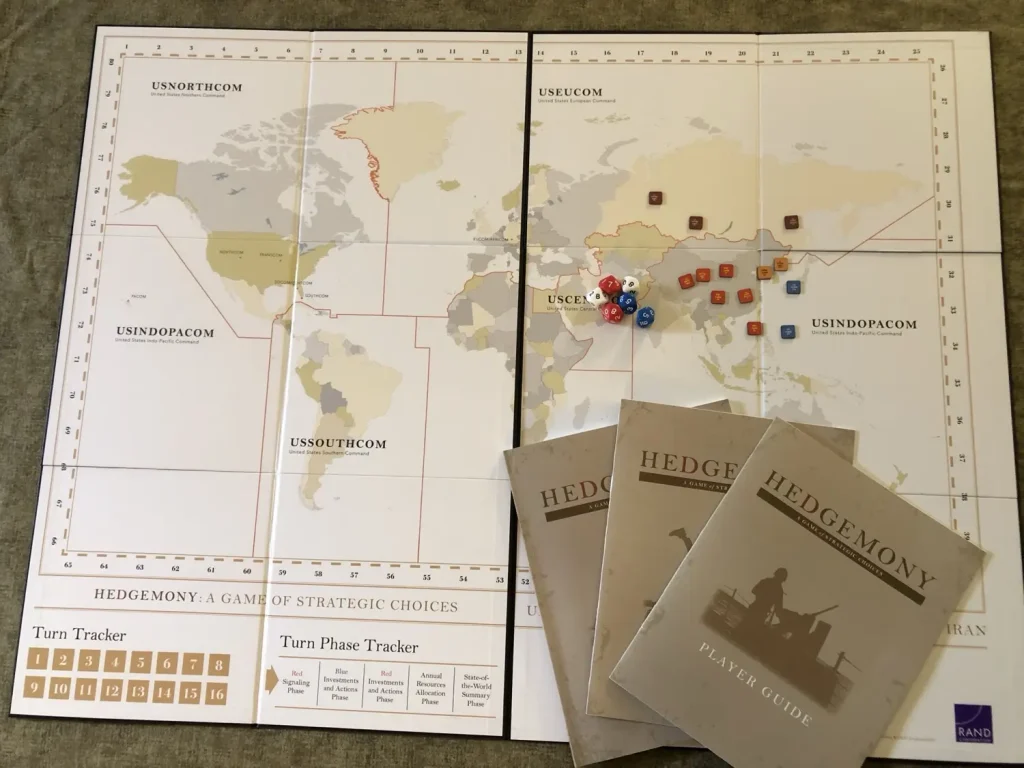
Hedgemony is a strategic wargame for analysing international power politics and strategic resource allocation at the highest level of state decision making. The game was developed by the RAND Corporation and serves as an analytical instrument for examining strategic decision processes in the context of long term geopolitical competition.
Participants assume the roles of state decision makers and are responsible for planning and employing limited political, economic, and military resources. The objective is to secure national interests, maintain strategic agency, and strengthen one’s position in the international system vis a vis competing actors. Participants must set priorities, weigh strategic risks, and adapt decisions to a dynamically changing geopolitical environment.
Hedgemony highlights the structural trade offs of strategic planning under limited resources and long term uncertainty. Participants experience how decisions in one domain produce far reaching consequences in others and how strategic competition, deterrence, and cooperation are intertwined.
The German Wargaming Center uses Hedgemony in training, analysis, and strategy workshops and employs the game to teach core concepts of strategic planning and international power politics. Through professional facilitation, structured delivery, and analytical evaluation, the German Wargaming Center supports organisations in reflecting on strategic decision processes, broadening institutional perspectives, and developing a deeper understanding of geopolitical dynamics.
Hedgemony is particularly suited for strategic education, security policy analysis, and reflection on long term planning processes in ministries, armed forces, research institutions, and security organisations.
Krisenmanagement & Methodik
Neustart - Crisis simulation game for preparing for large scale infrastructure disruption

Neustart is a realistic crisis simulation game designed to train the decision capability of administrations, authorities, and organisations in scenarios of large scale and prolonged infrastructure disruption. The focus is a comprehensive power outage whose effects gradually expand across key areas of public life including communication, supply, security, and administration.
Participants take on the roles of a municipal crisis staff and must make strategic and operational decisions under high uncertainty and growing time pressure. They assess situation reports, define priorities, coordinate measures, and interact with a range of actors including emergency services, utility providers, political decision makers, and the public. The game makes clear how tightly coupled critical infrastructures are and how disruptions in one domain can cascade into wide ranging systemic effects.
The German Wargaming Center offers Neustart as a professionally facilitated simulation format and provides full game direction and delivery. This includes scenario preparation, structured facilitation of the game process, dynamic injection of new situation developments, and subsequent evaluation and reflection on the decisions made. This methodologically guided process ensures that the simulation is not only realistic but also generates targeted strategic learning outcomes.
A particular focus is the analysis of decision processes under uncertainty, inter institutional coordination, and the identification of structural challenges and potential improvement areas. The simulation enables participants to experience the consequences of their decisions directly and to critically reflect on existing processes and assumptions.
Neustart is used by the German Wargaming Center for training and development of crisis staffs, preparation for complex crisis scenarios, and strengthening institutional resilience. The format is suited for public administrations, authorities, organisations with security responsibilities, and operators of critical infrastructure and supports organisations in sustainably improving their ability to act in crisis situations.
Blotto - Experimental strategy game for analysing strategic decision making
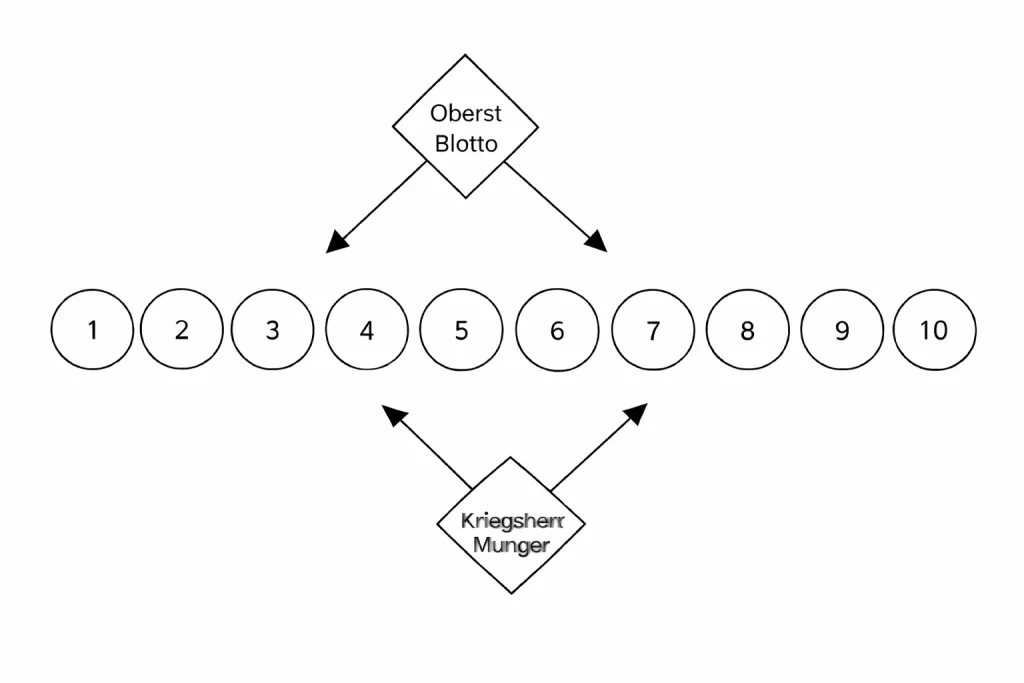
Blotto is an experimental strategic wargame for analysing decision behaviour under limited resources, uncertainty, and strategic competition. The game was developed by Professor Klaus Beckmann, President of Helmut Schmidt University University of the Federal Armed Forces Hamburg and Fellow of the German Wargaming Center. It is based on the classic Colonel Blotto model from game theory, which serves as a foundational model for strategic resource allocation.
At the core of the game is the challenge of distributing limited resources across multiple competing arenas such as military, economic, or political dimensions. Participants must make strategic choices without full knowledge of the opponent’s decisions and must account for both short term effects and longer term consequences. The game demonstrates that strategic success depends not only on the amount of resources available but on effective prioritisation and allocation.
In its extended form, Blotto represents several interconnected strategic dimensions including military capabilities, economic production capacity, and political influence factors. Decisions in one area affect options in others, creating complex strategic interdependencies. At the same time, the deliberately reduced complexity enables clear analytical observation of strategic decision logics and their consequences.
The German Wargaming Center uses Blotto as a research game as well as a tool for training and strategic analysis. Due to its clear structure and flexible parameterisation, it is well suited for experimental applications in research contexts and for conveying foundational strategic concepts. It enables systematic analysis of human decision processes and supports organisations in reflecting on and improving strategic thinking, prioritisation ability, and decision quality under uncertainty.
Blotto is particularly suitable for research purposes, strategic education, and the teaching of fundamental principles of strategic planning and decision making in military, political, and institutional contexts.
The Prussian Kriegsspiel - Classic military wargame for developing military decision capability
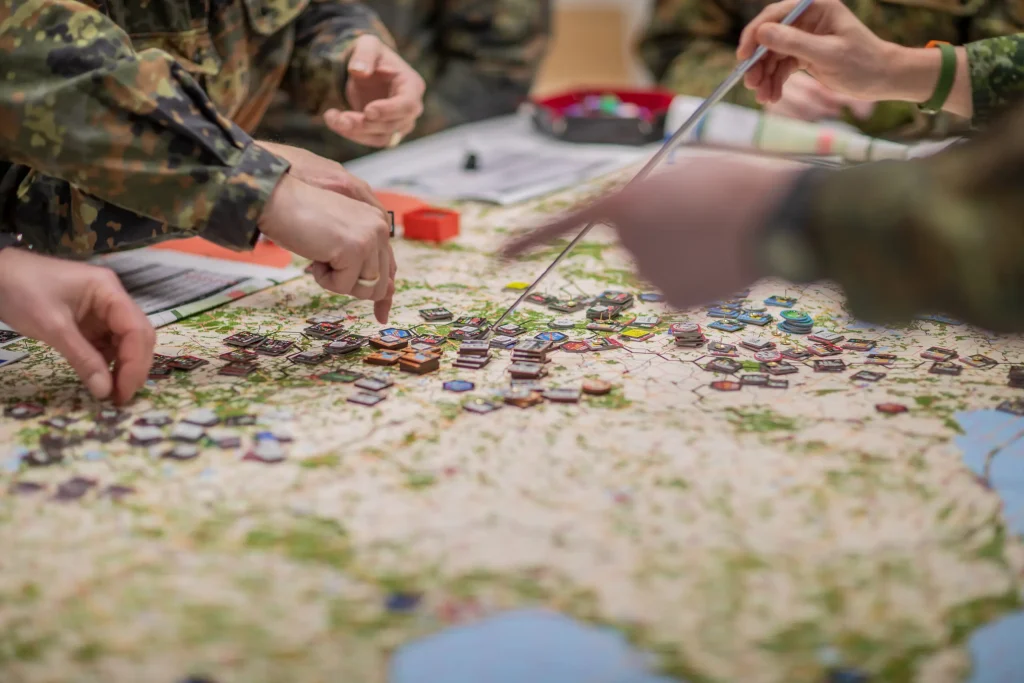
The Prussian Kriegsspiel is the historical origin of modern military simulation and remains a conceptual foundation for strategic and operational wargaming. It was developed in the nineteenth century to prepare officers systematically for the challenges of military leadership and to train decision making under realistic conditions.
At the core of the game is the simulation of military operations in a dynamic environment shaped by uncertainty. Participants assume military leadership roles and make operational decisions based on limited and partially incomplete situational information. Their decisions are assessed by a game direction function and translated into concrete effects on the simulated situation. This creates an interactive decision environment in which the consequences of strategic and operational measures become immediately visible.
A key feature of the Prussian Kriegsspiel is its realistic representation of military decision processes including fog of war, uncertainty about adversary intentions and capabilities, and the time lag between decisions and effects. The game illustrates that military leadership is not based solely on formal rules but depends on judgement, experience, and the ability to remain capable of action under uncertainty.
The German Wargaming Center uses the Prussian Kriegsspiel in training, analysis, and research formats and consciously connects to the historical tradition of academically grounded military decision simulation. In delivery, the game supports both the teaching of core principles of operational leadership and reflection on modern strategic decision processes in complex security environments.
As the origin of modern wargaming methodology, the Prussian Kriegsspiel retains distinctive relevance. It conveys foundational principles of strategic decision making, fosters analytical and systems thinking, and provides a methodological bridge between historical military education and contemporary forms of strategic simulation.
Strategic Game Design Lab
Strategic Game Design Lab
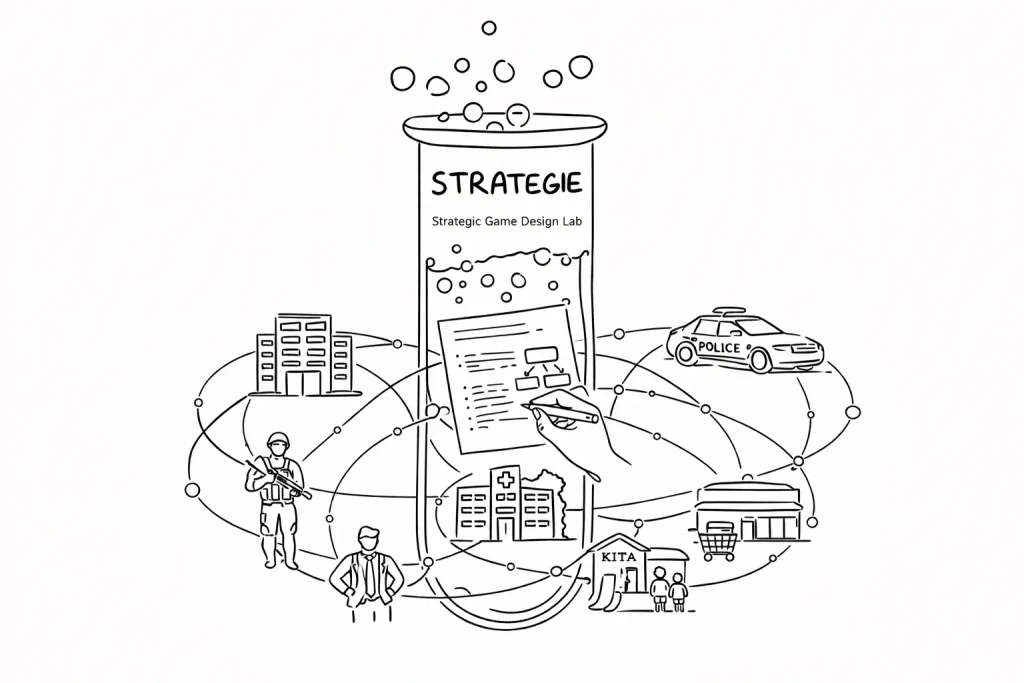
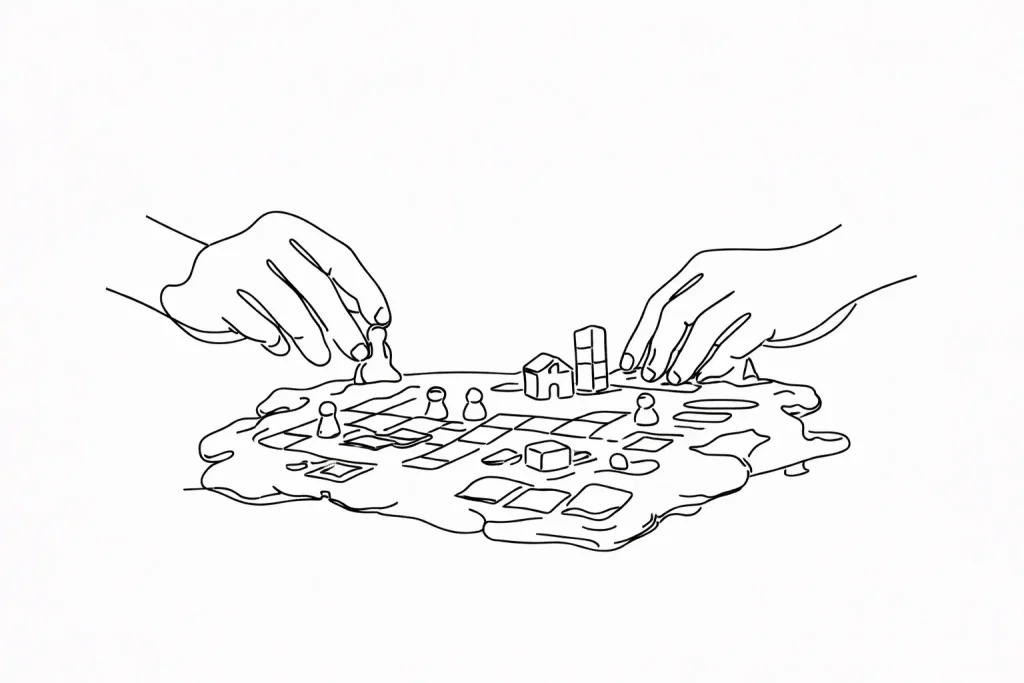
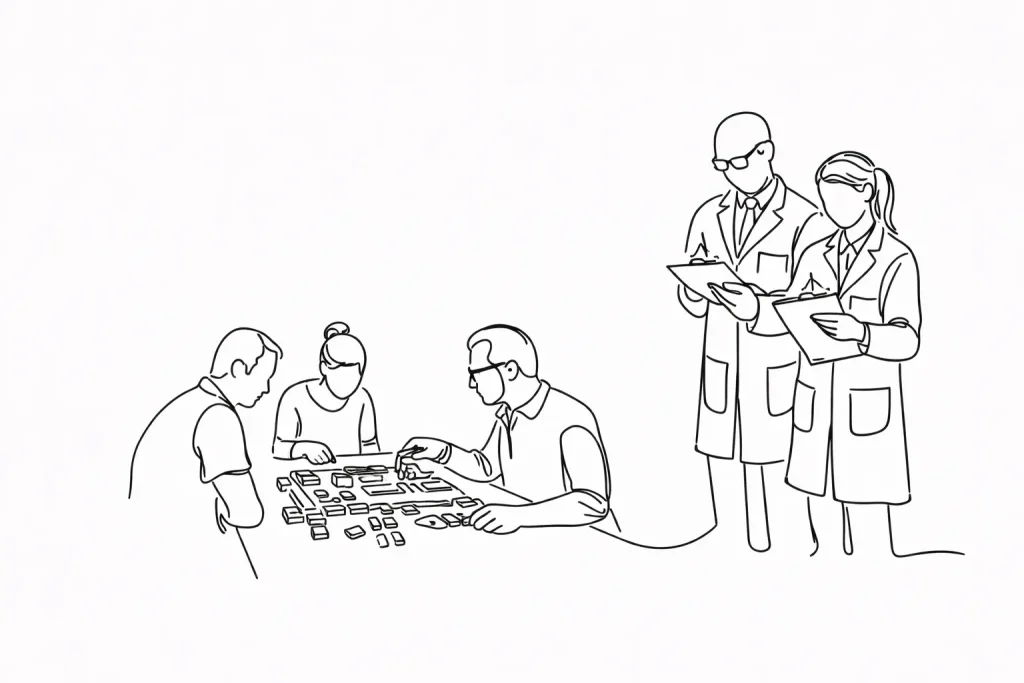
Methodologically grounded training and research format for developing analytical wargames
The Strategic Game Design Lab is a methodologically grounded training and research format of the German Wargaming Center dedicated to the systematic development of analytical wargames and strategic simulation games. It was first delivered as part of the international seminar “Wargaming and Strategy Formulation in International Security: Training for Emerging Challenges” and provides a structured approach for translating strategic questions into robust game designs.
The focus of the format is not primarily on playing existing games, but on designing new analytical game concepts derived from real strategic problems. Participants follow a structured design process to define strategic questions with precision, analyse their underlying assumptions, and identify suitable game mechanics that allow these questions to be investigated in a methodologically sound way. In this sense, the design process itself becomes an analytical instrument, helping to structure complex strategic problems and to make their core decision dimensions visible.
A particular emphasis lies on systematically exploring the underlying problem. Through facilitated design conversations and analytic techniques, implicit assumptions, trade-offs, and decision contexts are surfaced and made explicit. Building on this problem structure, participants develop mechanics, decision spaces, and interaction models that are capable of eliciting relevant decision behaviour and making strategic dynamics observable. This approach follows the core principle that every analytical wargame begins with a clearly defined research question and is deliberately structured to generate insights into strategic behaviour, institutional decision logics, and systemic dynamics.
The Strategic Game Design Lab teaches key principles of professional wargame design, including the definition of analytical objectives, the modelling of strategic actors and decision environments, the development of appropriate mechanics and adjudication approaches, and the structured observation and evaluation of player decisions. Participants learn how games can be used as an empirical research method to generate qualitative insights into strategic interaction, decision-making under uncertainty, and plausible future developments.
The format connects theoretical foundations with practical application. Working in interdisciplinary teams, participants develop their own game designs addressing real security policy, geopolitical, or geoeconomic challenges. This iterative process includes analysing the strategic context, defining the analytical purpose, developing scenarios and mechanics, and subsequently playtesting and reflecting on the designs produced.
As a training and research format, the Strategic Game Design Lab helps organisations understand and apply wargaming not only as a training instrument, but as a systematic research method. It strengthens the capability to structure strategic problems analytically, develop suitable simulation models, and use wargaming deliberately to examine complex strategic questions.
The Strategic Game Design Lab exemplifies the German Wargaming Center’s approach of advancing wargaming as an academically grounded method for strategic analysis and knowledge generation and enabling decision-makers and analysts to conceptualise and apply their own analytical simulation formats.